
From the desk
Microplastics in Bottled Water: The Hidden Truth in Every Sip
Nutru
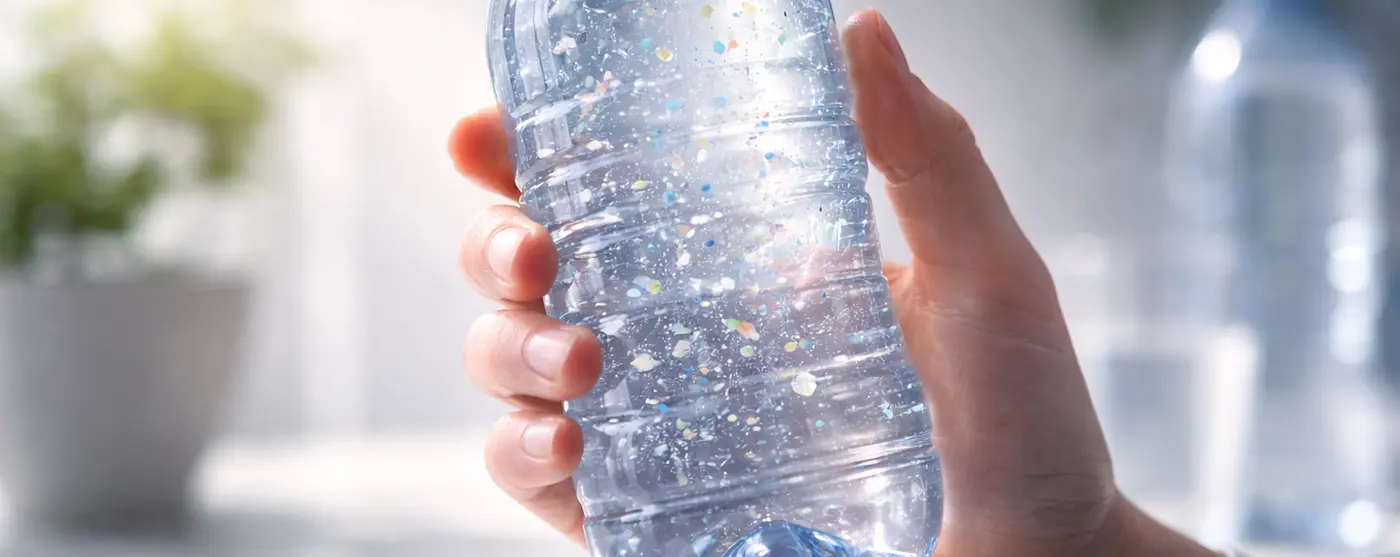
You grab a bottle of water thinking it's the cleanest, safest option available. It's sealed, portable, and widely trusted. But what if that same bottle contains tiny plastic particles you can't even see?
Microplastics are extremely small pieces of plastic, typically less than 5 millimeters in size. In bottled water, these particles often originate from the packaging itself — the bottle, the cap, or even the bottling process. Heat, sunlight, and time can cause plastic to degrade and shed particles. The friction from twisting caps can release tiny fragments, and microplastics can already be present before the bottle is even sealed.
Recent studies have found that many bottled water brands contain microplastics — sometimes hundreds or even thousands of particles per liter. While scientists are still determining long-term effects, we know microplastics can carry chemicals like BPA and phthalates, which may interfere with hormones. Very small particles (nanoplastics) might even enter human cells.
Microplastics aren't just in bottled water — they're everywhere: oceans, soil, food, and even the air. Plastic bottles are part of a much larger environmental issue. Millions are produced every minute worldwide, and many end up as waste, breaking down into microplastics over time.
You can make smarter choices: switch to tap water if it's safe in your area, use reusable bottles made of glass or stainless steel, avoid leaving plastic bottles in heat, and filter your water for an extra layer of precaution. Small changes can reduce both your exposure and your environmental footprint.
Microplastics in bottled water are a reminder that convenience often comes with hidden trade-offs. While research is ongoing, awareness is the first step toward better choices.